

Transformation
Six-week Training in Social & Behaviour Change Communication (SBCC) + Community Engagement through Participatory Theatre & Social Research
Go beyond information sharing — build communication people trust enough to act upon. Field-ready tools in participatory theatre and SBCC for development and humanitarian professionals. Grounded in SBCC theory and participatory research, with forum theatre and physical theatre techniques as impactful 'people-centred' tools to uplift your practice.


Turning knowledge into action
More than tick-box engagement
Empowering communication
5th Edition
Join an excellent cohort of like-minded practitioners and stay connected for ongoing support and inspiration

I loved how games can teach, and I cant wait to apply these skills to community meetings – which are so boring and restricted. This training gave me freedom to create and fail - that's where real learning happens.
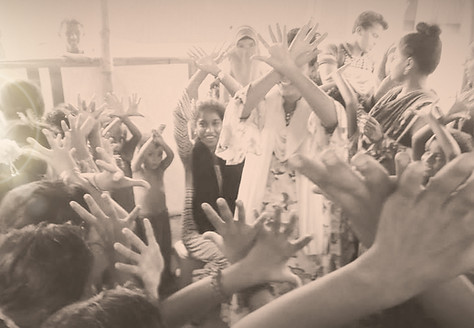
12
Maximum cohort size
Individualised attention
15+
Countries
Past participants
100%
Applied
Field-ready tools
30+
Organisations
Trust this approach
What you'll receive
In six interactive workshops plus guided self-study, you will learn to design and deliver community engagement and SBCC projects that combine Forum Theatre, physical theatre, participatory social research, and community-centred approaches to driving and measuring change.
You will leave with a field-ready project “starter kit”: a draft project concept, participatory research plan, Theory of Change, delivery structure, facilitation plan, go-to games and exercises and an outcome/impact measurement approach you can adapt to your context.

Screened enrolment: Applications are reviewed individually. Places are limited to maintain the quality of peer learning.
2 for 1 'Buddy offer'
THE PROGRAMME
What you'll learn
A practice-led journey from theory to field-ready application. Each session builds on the last — combining live facilitation, games, peer learning, and real-world case studies.
HOW THE TRAINING WORKS - THREE COMPONENTS
01
Weekly Online
Sessions
3 hours per week of live, facilitated group learning with your cohort.
02
Guided Self-Study
2–3 hours per week of structured reading, reflection, and guided practice exercises.
03
Personalised Mentorship
Individual mentorship throughout the programme to support your professional development.
Syllabus
Core principles of Participation, Communication, Social Change, Theatre of the Oppressed, with exercises that interrogate what change is and how it comes about, and explore processes for designing Theories of Change with communities.
WEEK 1
You’ll practice step-by-step tools for introducing change concepts with communities and building a Theory of Change together. Feminist and decolonial approaches are used to stress power analysis, whose knowledge counts, and how “success” is defined.
WEEK 3
Here you'll test facilitation principles in practice and adapting methods for different humanitarian and development settings: conflict, displacement, health emergencies, access to justice and climate action.
WEEK 5
You’ll learn how participatory social research supports better SBCC and community engagement design. We introduce practical tools to gather insight safely and respectfully, and to avoid extractive “data taking.”
WEEK 2
You’ll learn the principles and practice of Forum Theatre as a framework for communication and community engagement. This explores how image, enactment, plot, dramatic action, character, internal voices, external voices, and interactive games can be used in face-to-face as well as traditional/ social media formats.
WEEK 4
You’ll learn practical steps to deliver, monitor and evaluate your project ethically and effectively, including facilitation guidance, adaptive learning cycles, and “whole-human / whole-process” practice.
WEEK 6
Training Outcomes
BY COMPLETION
Facilitate community-centred problem analysis
Lead, commission or programme-manage participatory theatre activities
Design SBCC interventions using people-centred participatory methodologies
Adapt techniques for humanitarian and development contexts
Build evidence and report impact
Certificate of completion awarded
Key takeaways

-
Improve your impact
-
Develop confidence
-
Deliver on 'the Participation Revolution'
-
Apply theatre for change
-
Integrate participatory research
-
Co-design assessments
-
Strengthen your professional toolkit
-
Differentiate yourself
Read more
WHO THIS IS FOR
Designed for Development & Humanitarian Professionals

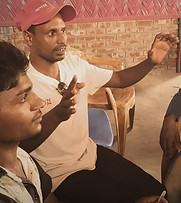
Building Transformation is a multidisciplinary programme for professionals working in development, humanitarian, and social impact spaces. It also welcomes media, theatre, and arts practitioners who are committed to using their craft as a tool for positive change.
If you are motivated to learn, collaborate, and deepen your practice in participatory and community-led approaches, this programme is likely a strong fit.
That said, this is a selective programme. We carefully review applications to ensure each cohort member brings relevant professional experience, a genuine commitment to participatory practice, and a dedication to community empowerment.
Screened enrolment: Applications are reviewed individually. Places are limited to maintain the quality of peer learning.
Programme & Project Staff
NGO and INGO programme managers, project officers, and field coordinators who design and implement community-facing interventions.
Communications & Advocacy Professionals
SBCC specialists and communications leads who need to move beyond top down one-way messaging.
Humanitarian Response Staff
Professionals in emergency and post-emergency contexts — protection, health, WASH, camp coordination, and livelihoods.
Researchers & Evaluators
M&E specialists seeking participatory, community-led approaches to data collection and evidence generation.
Media Professionals
Media for Development practitioners who want to move beyond extractive storytelling and learn participatory techniques to engage communities affected by disaster, crisis, poverty or conflict in the issues that affect them.
Theatre practitioners
Theatre professionals who want to learn how to apply forum and physical theatre to drive dialogue, participation, and tangible social and personal change.
Snapshot summary
01
Participatory Communication
Grounded in social and behaviour change theory — this participatory approach equips you to design and lead two-way engagement that communities trust.
02
Real experience of Forum & Physical Theatre
Every session is linked to case studies of real project experiences from across Sub-Saharan Africa, South Asia, and the Middle East.
03
Live, Interactive & Cohort-Based
All 6 sessions are live and facilitated. No pre-recorded content — you learn by doing, supported by peers and personalised mentorship throughout.

3 hrs
PER LIVE SESSION
Cohort-based
PEER LEARNING
Certificate
ON COMPLETION
Global
ONLINE DELIVERY
YOUR TRAINER
Who will guide you
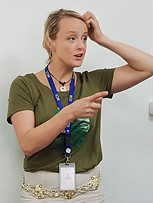
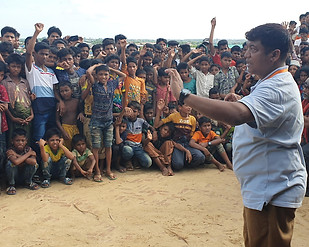
Building Transformation draws on over 25 years of interdisciplinary practice at the nexus of communication for development, participatory methodologies, and applied theatre. It is led by Melissa Eveleigh, a specialist in Social and Behaviour Change Communication (SBCC), PhD Candidate at the Institute of Development Studies (IDS), Communicating with Disaster Affected Communities (CDAC) Network Expert, and Associate of the Governance and Justice Group. Arts for Action serves as the legal and organisational umbrella for this body of work, housing Transform Consult and Building Transformation and encompassing Eveleigh’s decades of practice with associate networks across Malawi, Zimbabwe, Bangladesh, Myanmar, Pakistan, India and beyond. This includes over a decade of work in Malawi, five years in Zimbabwe, and sustained engagement in Bangladesh during the Rohingya refugee response. Across these settings, networks of community-based communicators were trained and supported to deliver participatory research, theatre, and communication interventions as part of larger national SBCC programmes. This approach has embedded locally led, theatre and arts-based methodologies within broader systems of development and humanitarian practice. Her work integrates deep theoretical knowledge with hands-on practice applying interactive, play-based learning, forum theatre, and psychosocial approaches with participatory, community-centred methods for personal and social transformation. This has informed the design, implementation, and evaluation of programmes addressing governance, access to justice, gender-based violence, public health, climate resilience, conflict and humanitarian response. Her leadership experience includes senior advisory roles with organisations such as BBC Media Action, as well as the design and delivery of large-scale national and community-level programmes across Sub-Saharan Africa and South and Southeast Asia. Collectively, this body of work contributes to evolving discourse and practice in SBCC, offering a model that bridges creative practice, participatory research, and systems-level change.


Practitioner-led. Evidence-based.
Bringing over 25 years of in-person experience across Sub-Saharan Africa, South Asia and the Middle East.
(Former) Senior Advisor
BBC Media Action
PhD Researcher
Institute of Development Studies (IDS), University of Sussex
Expert
Communicating with Disaster Affected Communities (CDAC) Network
Founder
Transform Consult, Arts for Action, Arts Lab Zimbabwe & Nanzikambe Arts & Development Organisation, Malawi









FROM PAST PARTICIPANTS
What Practioners Say

"I want to inspire and transform people, not engage in box-ticking"
WHO
Dr Khalid El Tahir,
Emergency Sub-office Manager
This methodology changed how we approached community engagement in our health programmes. The Forum Theatre techniques became a core part of our SBCC toolkit - the impact was educational and empowering.
IOM
Syed Rashed
PSEA Network Administrator
I was sceptical about applying theatre in a humanitarian context, but Melissa's depth of experience shone through and transformed our programme. This is the most rigorous approach to participation and co-creation I have witnessed.

Broederlijk Delen
Bram Vandewalle
Advisor Agroecology Uganda
This training provided a solid foundation for meaningful communication for change in our communities and gave us tools we could immediately apply. The whole-project approach builds a stronger evidence base with community-voice at the centre.
SCREENED ENRLOLLMENT
Apply to Enrol
Applications are individually reviewed. We assess professional background, sector experience, and readiness to engage with participatory methodology. Places are limited.
Do not limit yourself, if you are interested, you are most likely eligible!
-
6-week training programme (live online sessions)
-
Field-ready participatory communication toolkit
-
Guided self-study materials
-
Personalised mentorship throughout
+£50 optional add-on: A one-on-one coaching session to explore your professional practice or a specific project.